
Override
The framework is a tool, not a rulebook

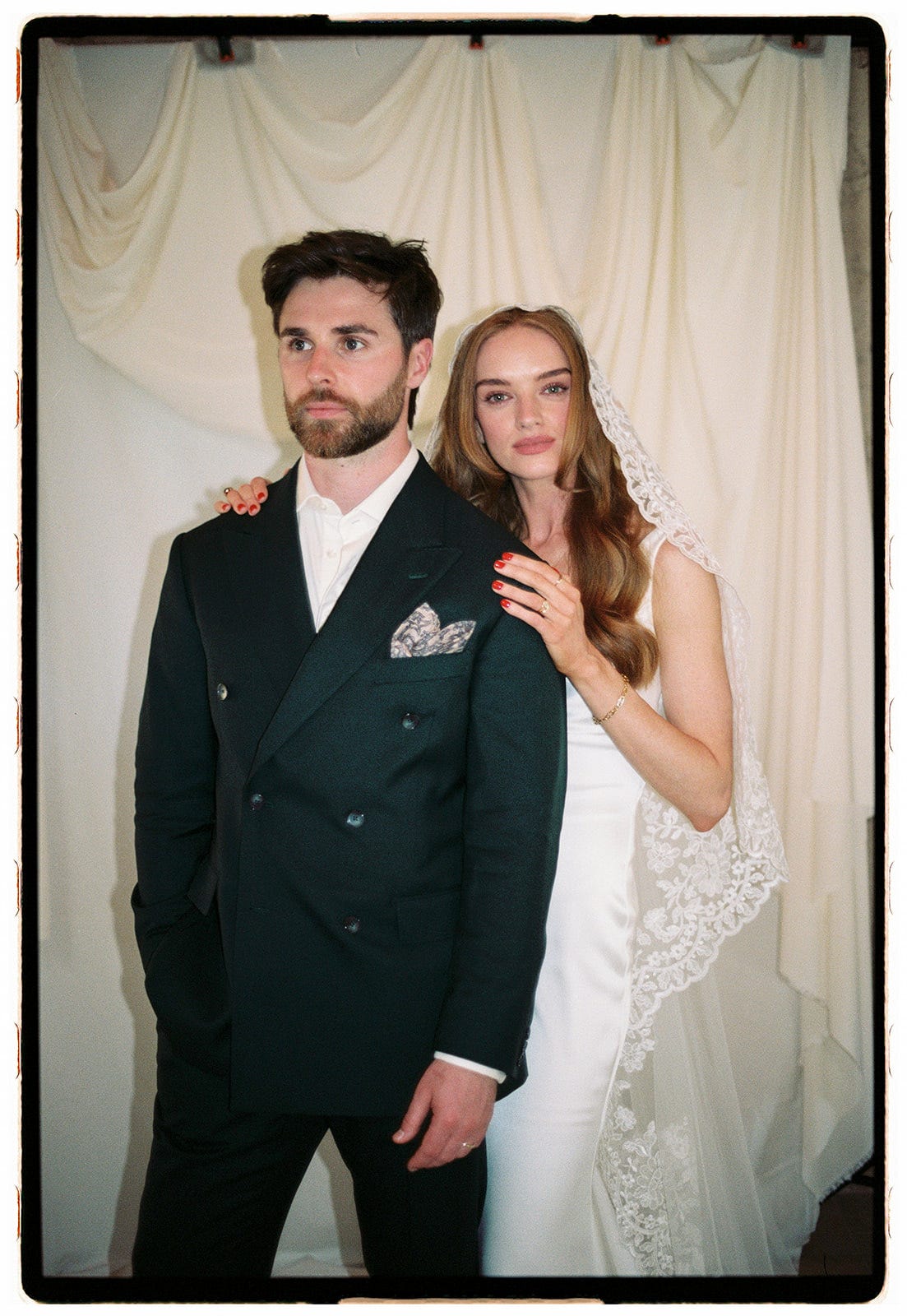
According to my seasonal colour analysis, white is not my colour.
I’m a Spring—light to warm, with neutral undertones leaning yellow, auburn hair, clear green eyes. The system says warm shades, all day long. And here’s where it gets interesting: those neutral undertones, that slight lean rather than a hard yellow, give me a bit more versatility. A little more room to play. Not everyone has that flexibility, but understanding where you sit—truly sit—within any framework is part of knowing when and how to bend it.
I’ve genuinely loved this journey. Seasonal colour analysis is fun, smart and useful for outfit curation and makeup choices.
But it’s not written in stone. It’s not law. It’s not to be obeyed at all costs.
So when I got married earlier this year, I decided I wanted to feel like me. What would strict adherence to the system have me do? Get married in tomato red? Buttermilk yellow? Absolutely not.
This is the crux: lean on frameworks when they serve you, but never follow them blindly. Your personal style can—and should—override what any system tells you. That’s key to being you. And being you is a necessary construct of feeling good, genuine, alive.
Side note: This shows up at work too
I see this same pattern with strategic frameworks—benefits ladders, positioning statements, brand pyramids. They’re genuinely useful. They give us structure, a way to think through complexity, a shared language. A polished visualisation with a neat narrative to present to clients. But they require knowledge and nuance to apply well. Too often they get treated like templates to fill in rather than tools to think with. The framework becomes the goal instead of the means.
The most effective work happens when you understand these tools deeply enough to know when to follow them and when to deviate. When to let the insight lead rather than force it into predetermined boxes. That fluency—that confidence to diverge—only comes from genuinely understanding why the rules exist in the first place.
The same is true here. Seasonal colour analysis gave me the knowledge. Understanding my specific position within the system gave me the permission.
Here’s how I wore white in my own way, drawing on the tricks I’ve learned to make non-you colours work for you.
The reflective silk dress
I love 90s minimalism—that spare, elegant restraint. When I first saw BACALL by Kyha Studios online, I knew instantly it was the one. I hadn’t tried it on. Hadn’t seen it in person. But the first image I’d seen was shot at blue hour, just before sunset, bathed in that warm, creamy light that makes everything glow golden. I was already in love.
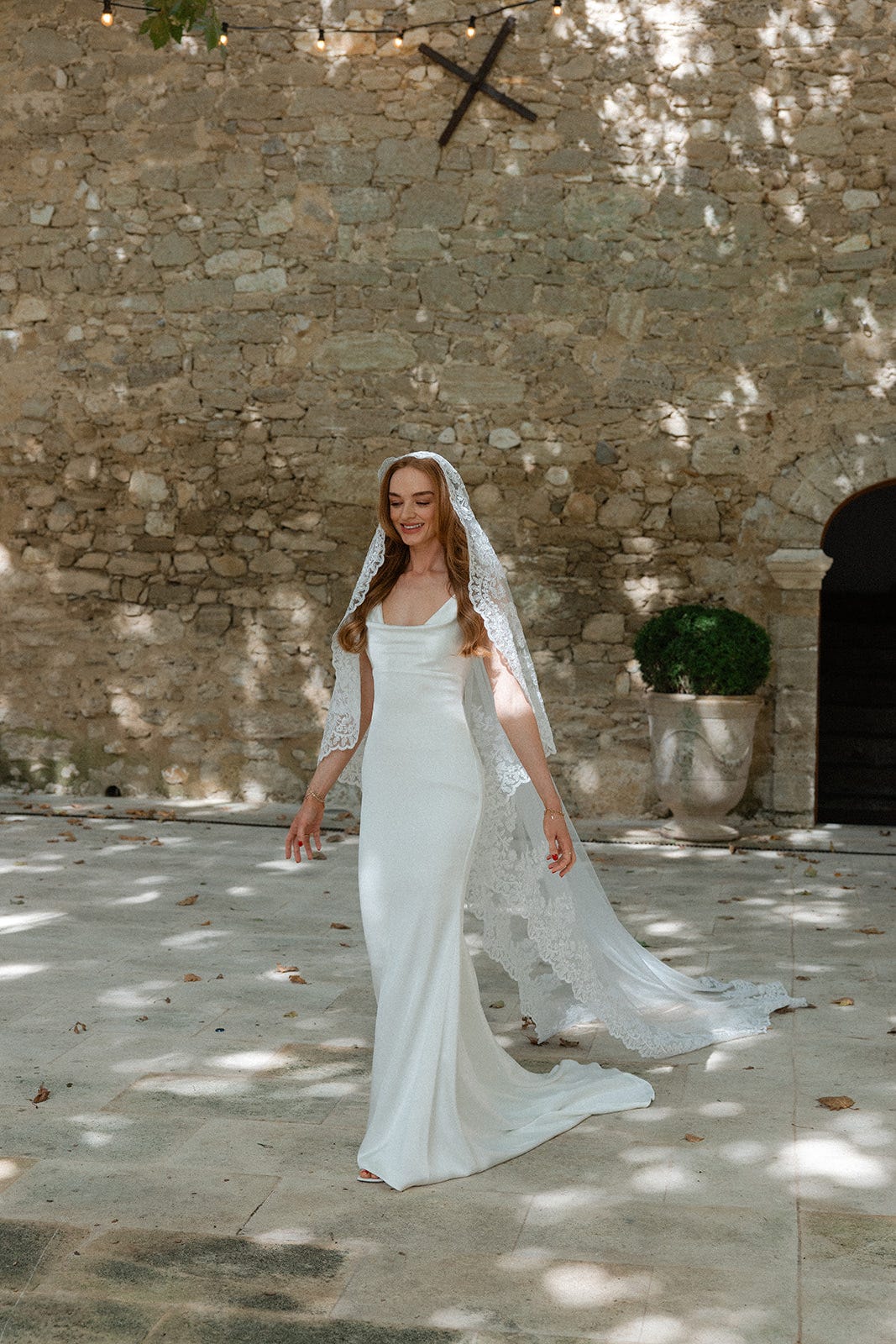
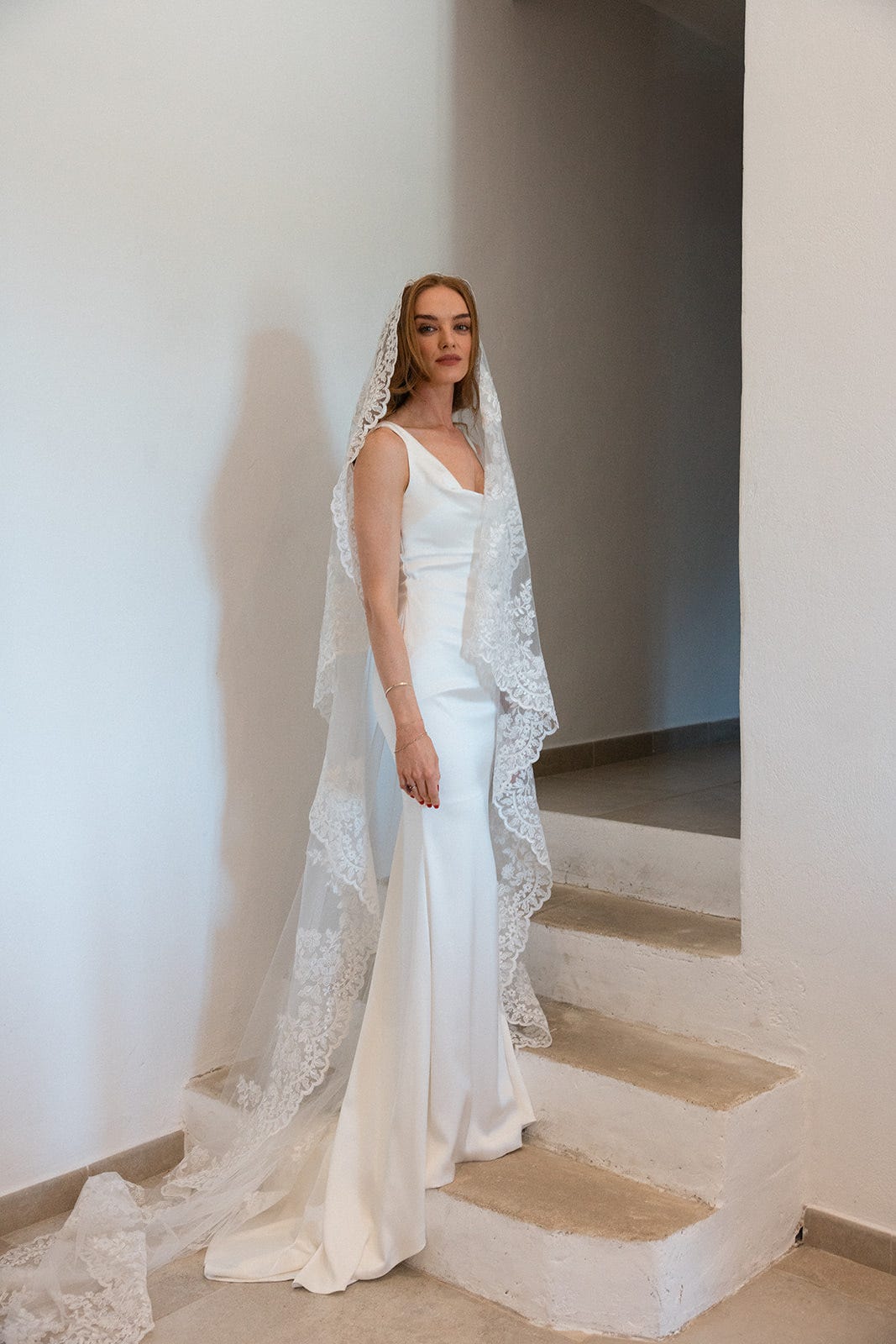
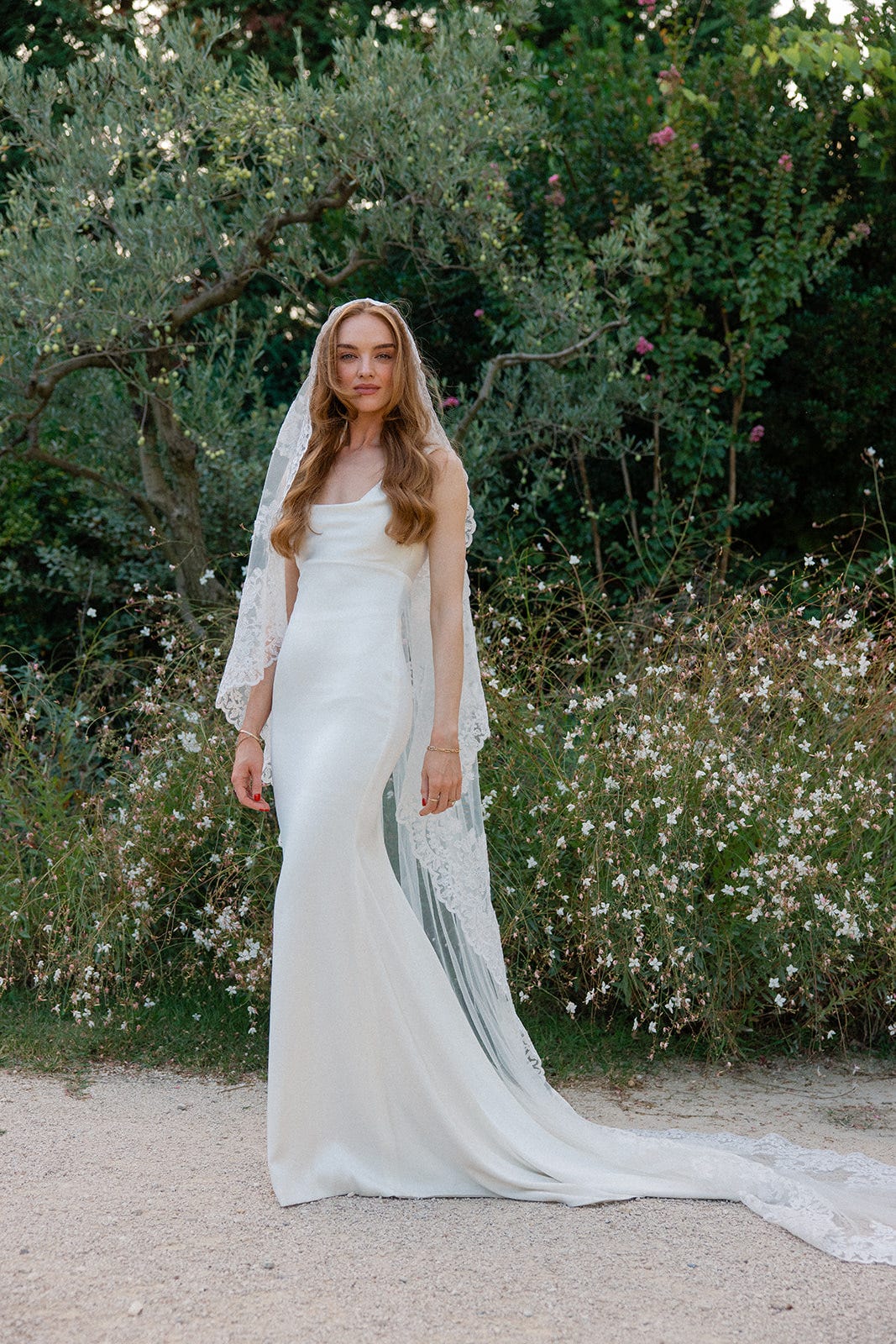
When the five of us arrived at Pretty Woman Bridal Studio in Edinburgh that cool October morning, I spotted it in the window. In the grey Scottish light, the white looked cooler, less creamy than in those golden-hour photos. But the shape—the slightly structured cowl neckline, the flowing bodice, that gorgeous silk sheen—won me over completely. I knew the reflective surface of the fabric would work in my favour, catching and bouncing warm light back onto my face rather than absorbing it away.
I tried it on first. Why delay what I’d already sensed would be perfect? Then I tried five other beautiful dresses, just to be thorough. But nothing compared. Everyone with me said the same. Not even close. Sold.
The trick: if you are a clear season like me (Spring or Winter), choose fabrics that reflect rather than absorb light. Silk’s natural luminosity creates movement and warmth that flat cotton or matte fabrics never could.
The statement lace veil
I bought the dress nearly a year before the wedding—super organised—but took my time with the veil. The dress’s minimalist simplicity wanted something with intricacy, texture, weight. I loved the idea of really traditional Spanish-style lace: thick, bold, statement-making. Like Sophia Loren’s wedding outfit in Houseboat—that kind of old-world romance.
But every bridal shop seemed to stock only superfine, delicate, almost invisible veils at the time. Wispy things that disappeared. I eventually found exactly what I wanted from a girl selling her unworn veil online. She’d bought it, then wore her grandmother’s instead. Her loss, my gain.
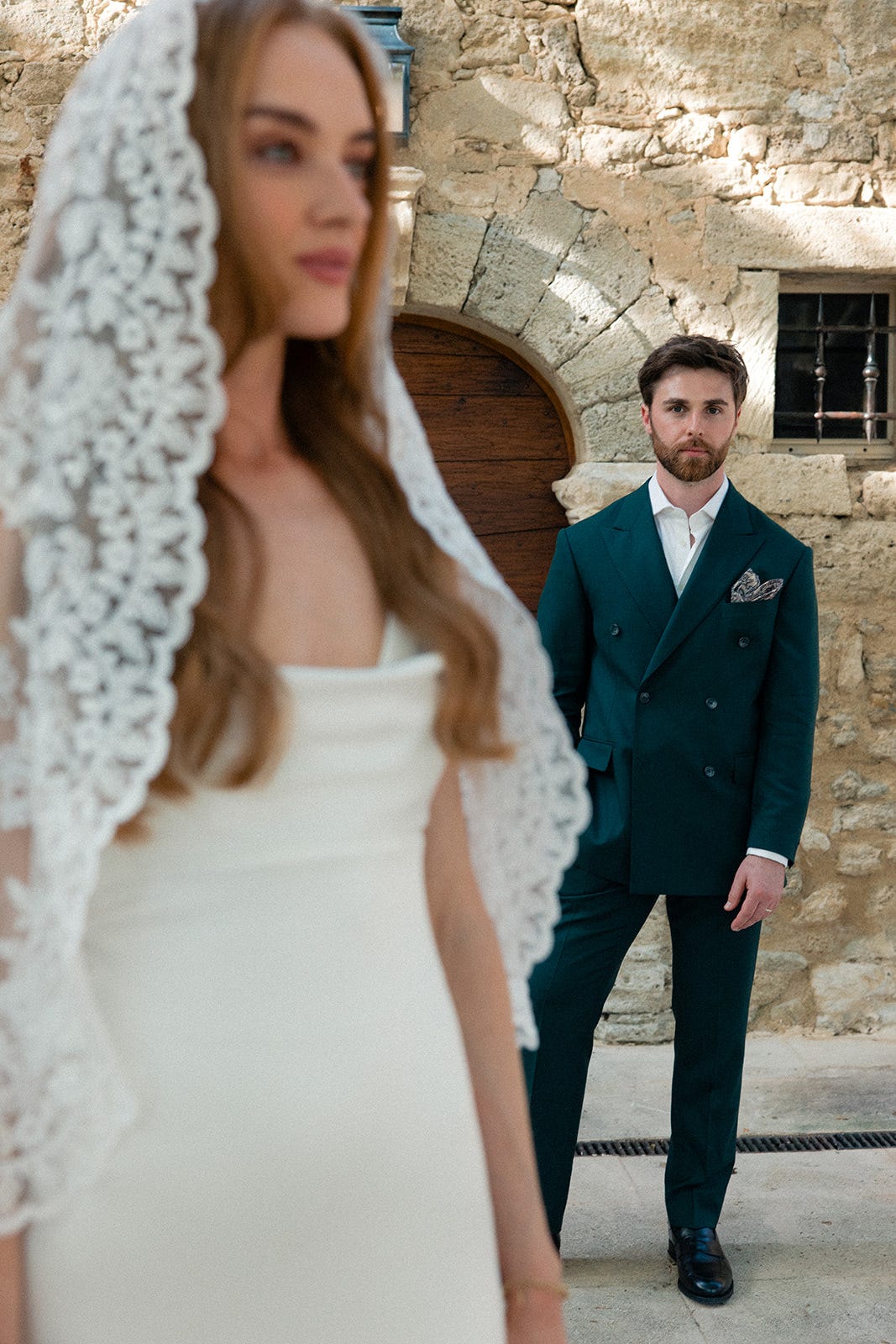
I knew instantly I wanted it pinned over the top of my head with the lace cascading down, framing my whole look. I loved the European feel of it—dramatic, a little theatrical, unapologetically romantic.
The trick: you can add warmth through texture and detail. Intricate lace adds depth and visual interest that draws the eye away from the cool white base colour.
The warm golden tan
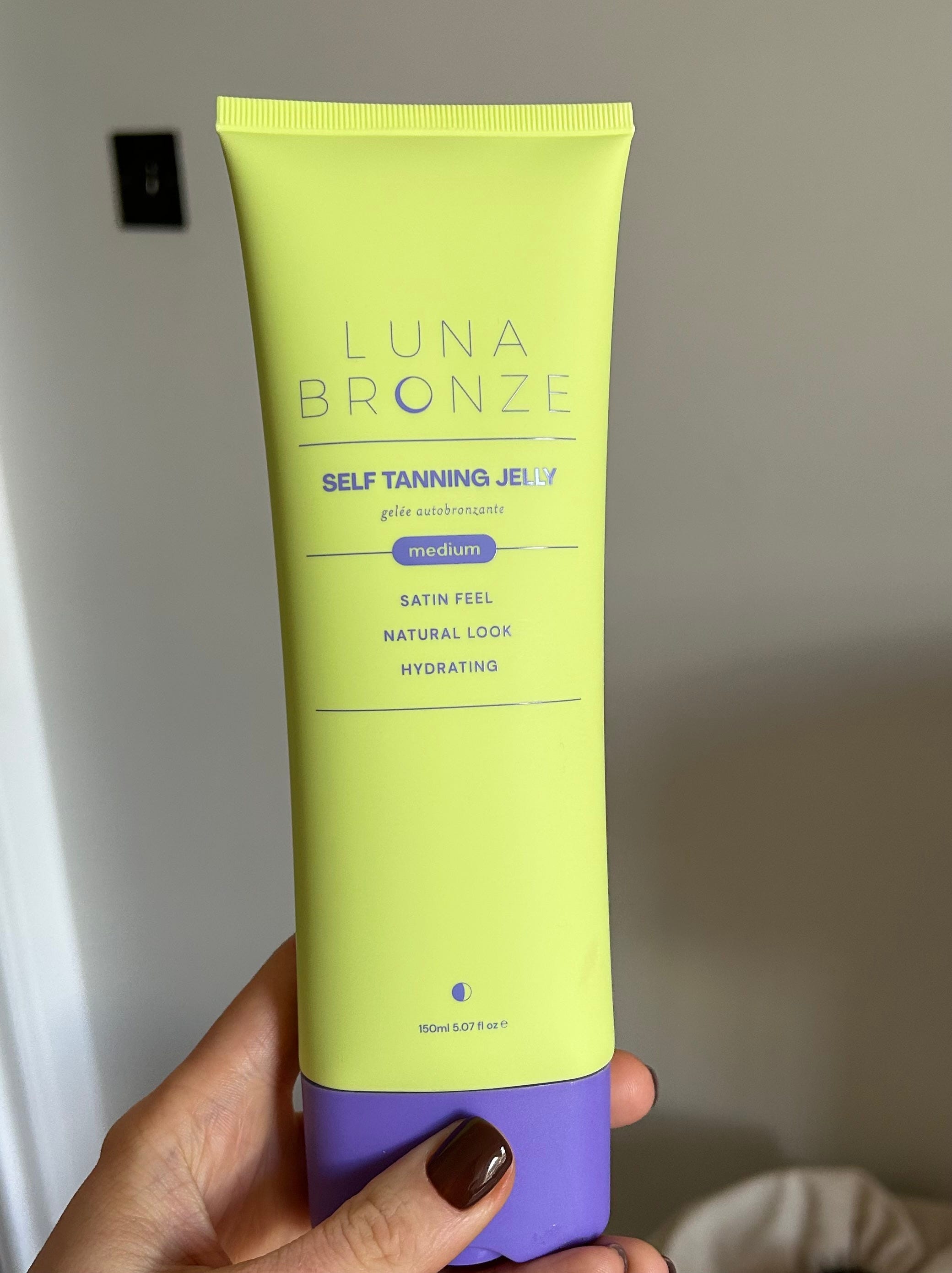
To achieve that sun-kissed glow, I used the best tan I’ve ever tried: Luna Bronze Self-tanning Jelly (side note: it’s purple on application). The olive undertone suited my skin perfectly, but more importantly, it dries instantly. No stickiness. Not even a trace you’ve applied it. It’s silky smooth. It feels like you’ve been dipped in velvet. When you’re doing wedding prep in the southern French sun, the last thing you want is to feel coated in product or lie awake trying to avoid staining hotel sheets.
I applied it Monday evening. Wedding was Wednesday. Perfect timing for that just-back-from-holiday warmth.
The trick: a tan changes everything—but it has to be your tan. The way your skin actually responds to sun. I tan golden—not deep mahogany, not reddish brown, not that odd green-grey some fake tans develop. I applied Luna Bronze Jelly once. That’s it. The golden base became the bridge between my Spring colouring and the white dress.

The warm makeup palette
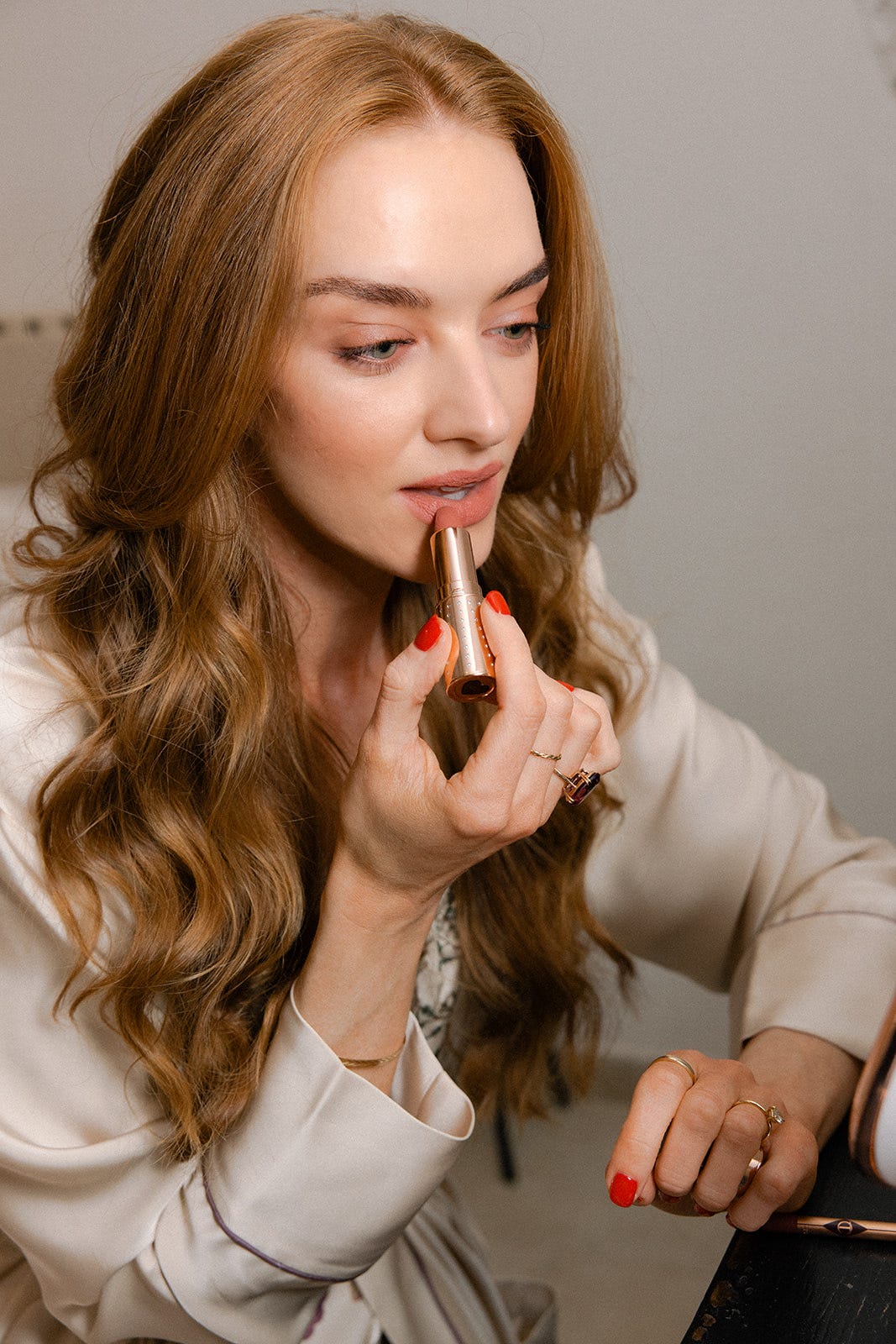
As an ex makeup artist doing my own face, I had three non-negotiables: look and feel like me, achieve a natural glowy base, and layer warmth everywhere—eyes, lips, cheeks.
The principle: choose one colour to run through your entire palette. Everything else hangs off it. For me, that colour was peachy-bronze. It showed up in my tan, my blush, my lipstick, the warmth in my eyeshadow. That single thread of colour unified everything and created cohesion between my skin, my makeup, and the white silk.
The base took the most consideration. I rarely wear full foundation but knew I’d need something smoothing to create an even canvas. After trying Natasha Denona (dried too matte, too quickly) and NARS (gorgeous but slightly too neutral-cool), I settled on Haus Labs. One of the girls at work had been raving about it for months, and she was right—it had the warmth I needed without looking heavy.
Then I went full warm spectrum. Mac’s Cocoa Riche brown liner to define the eyes. Armani Eye Tint in Cashew on the lids. Charlotte Tilbury’s Pillow Talk palette (the soft brown specifically) applied in light, diffused layers for depth without harsh lines. I wanted defined but soft—polished but not severe.
On my cheeks, Patrick Ta’s She’s The Moment blush in the cream formula, layered to mirror the peachy undertones in my complexion. Mac’s Wedding Belles lipstick, warmed up by mixing it with that same cream blush. The effect was cohesive—everything singing in the same warm register.
I finished with Chanel’s Universal Crème Bronzer for subtle definition, Lisa Eldridge’s Kitten Eye mascara (the perfect soft black), Tom Ford’s Luminous Highlighter for that lit-from-within glow, and Haus Labs’ loose powder—crucially, not matte, which makes it just dreamy.
The trick: double down on warm tones everywhere else. Peach, bronze, gold, terracotta—these shades bring warmth to your entire look, making the white dress feel intentional rather than draining.
The soft, undone hair
I kept my hair long and soft around my face specifically so I could wear the veil directly against my skin without shorter layers feeling too busy or fussy. I wanted movement, fluidity—the auburn reflecting warmth and catching light. Undone rather than architectural. Relaxed rather than rigid. The opposite of perfect.
I didn’t overthink the styling—soft waves, nothing too structured. The veil pinned at the crown, lace cascading down and framing everything. The hair became part of the warmth strategy, not separate from it.
The trick: use your hair as a warm frame. Let your natural colour—especially if it’s warm-toned—create a buffer between your face and the white. This is one reason why I think having your natural hair colour is so flattering. It works with your entire system—your skin tone, your undertones, the colours that naturally harmonise with you. It’s already calibrated to you in a way no dye job ever quite replicates, no matter how well done.
The golden light
One of the biggest reasons for getting married in the south of France was the light. That airy, diffused, butter-soft quality. The way late afternoon sun filters through plane trees and catches on old stone. There’s a romanticism to that landscape, that particular quality of light, that’s hard to replicate in harsher, cooler settings.
We married in a historic venue with raw exposed brick, aged wood beams, and that beautiful provincial glow—all warm ochres and honey tones. The venue itself became part of the colour story, wrapping everything in warmth.
We both made choices that felt right over what was expected. His deep green suit instead of traditional black or navy—it worked with the setting, with the light, with us.
The trick: consider your environment. Lighting and location matter enormously. One of the most fun things about planning a wedding is treating the whole thing like your own photoshoot. You’re not just planning a wedding—you’re art directing an experience. Think about how the light will hit at different times of day, how the venue’s colours will interact with what you’re wearing, what the backdrop does to the overall composition.
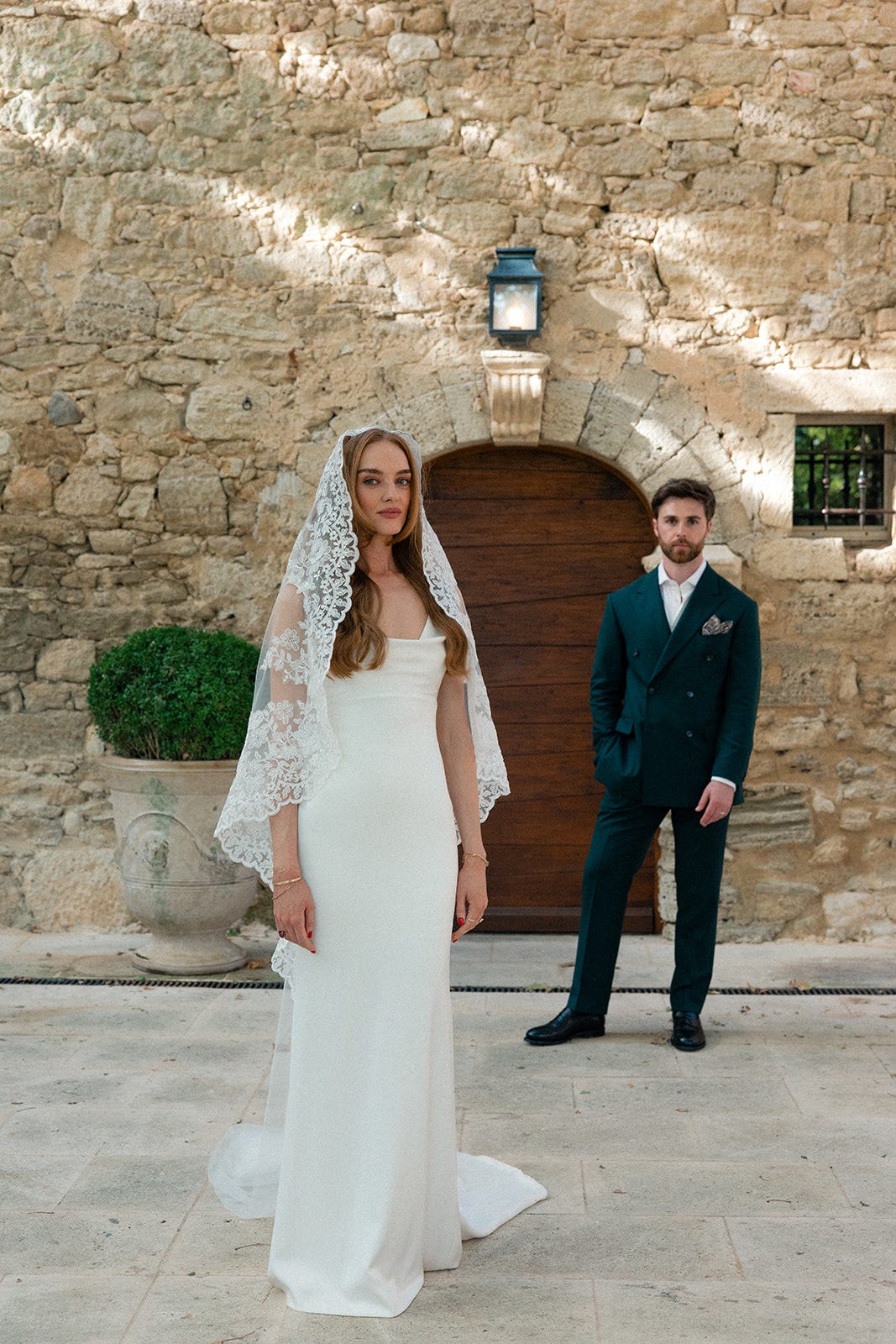
In the end, I wore white. But I wore it my way—surrounded by warmth, texture, and light. The system gave me the knowledge. My instincts gave me permission to break the rules. And that tension between structure and freedom? That’s where the magic lives.
Being yourself isn’t about perfect adherence to any framework. It’s about knowing the tools well enough to understand when they serve you and when they don’t. It’s about doing what authentically feels like you—what you feel good in. Because all the rules in the world mean nothing if you don’t recognise yourself when you look in the mirror.
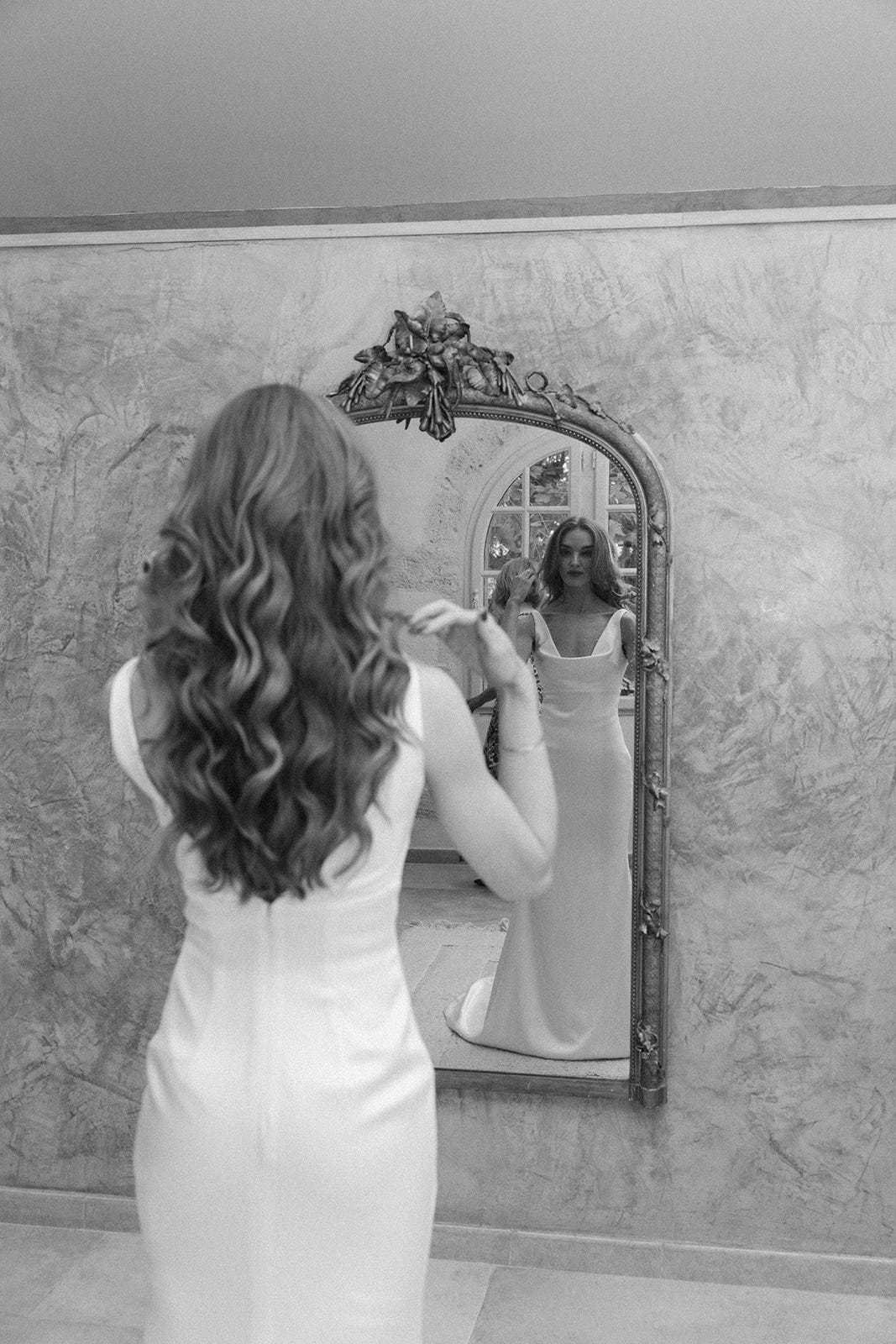
All photography at our wedding was shot by the sensational Alchemia.
Absolutely love this idea — knowing the rules means you know how to break them too. Such a killer way to look at how to wedding dress shop too.