
The long path is a meaningful one
Why depth outlasts reach

The premise for this essay came via email.
Apartamento sent it to me. As part of which was a book, The Italian Interiors of Elsa Peretti, photographed by Estelle Hanania. I immediately wanted it. I was drawn to its grandeur and Italian Renaissance influence. Safe to say it drew me into a rabbit hole of sorts about Peretti, her life and philosophy.


The more I have read, the more I think there is an anti-correlation between the underlying motivation of that philosophy and where we are in this cultural moment. She wholeheartedly believed in slow mastery. In dedicating an entire life to her work. In creating spaces that she not only lived in but that became part of her creative process and continued to inspire her, knowing that time spent there, acres of time, would be a necessary passage to output.
Now that stopped me.
This idea is nothing new. The Italian Renaissance painters spent entire chapters of their lives on a single work as early as 1400. But how refreshing today to read of the process being as important as the outcome. The time taken so valued, respected and protected for that very reason.
Compare that to our current moment; everything expected at breakneck speed.
This is not simply about time in the most rudimentary sense. It’s about what we gain during that time. We’re in danger of losing something incredibly important if speed to outcome continues to reign as the ultimate goal.
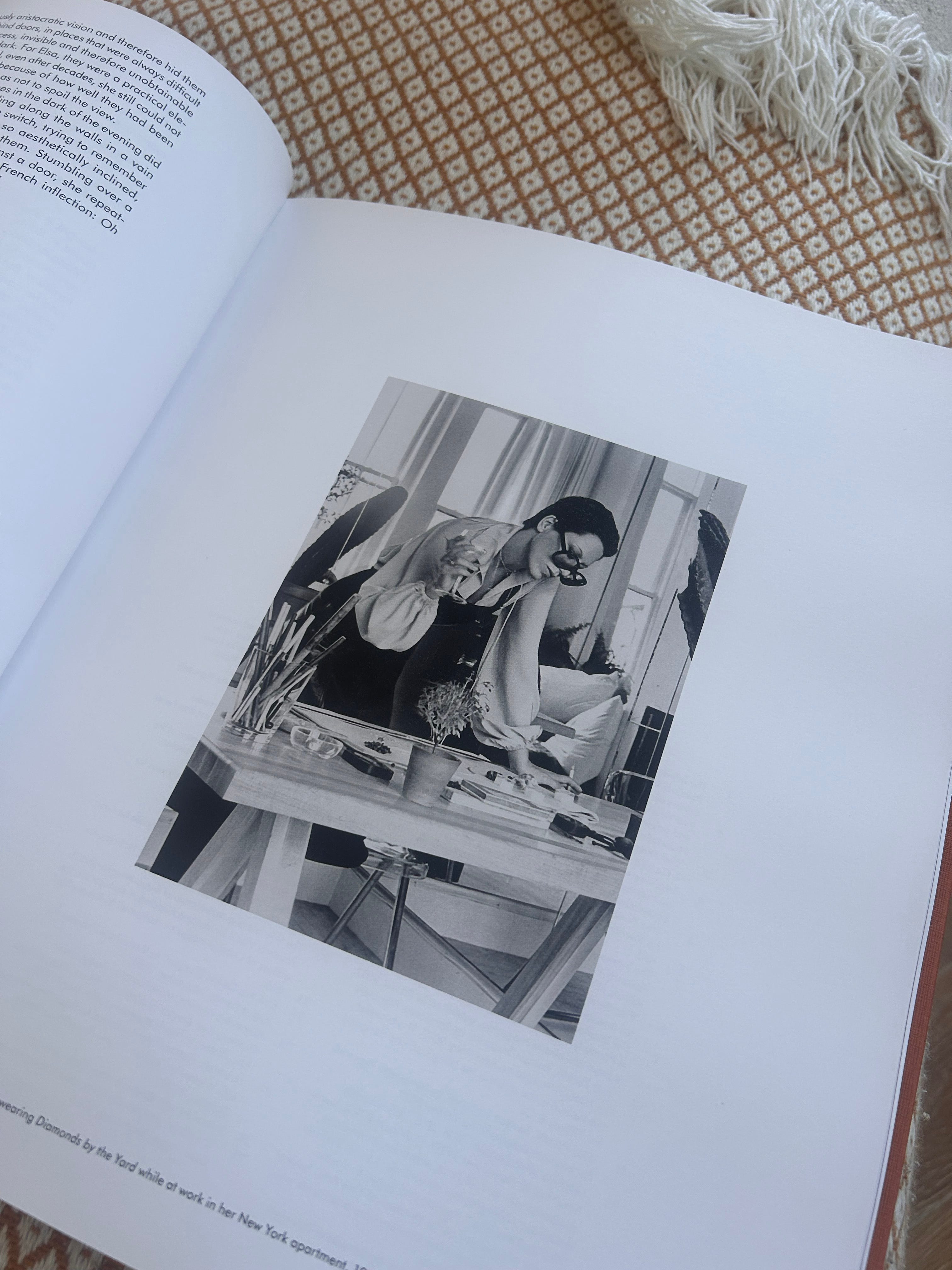
So who was Elsa?
Elsa Peretti was born into a wealthy Florentine family with a predetermined path awaiting her. She rejected it entirely, was cut off at 21, and built an independent life on her own terms. Model in Barcelona. Jewellery designer in New York. By the 1970s she was, as her obituary put it, muse and disrupter of a pack that included Andy Warhol.
After an introduction to the CEO of Tiffany, she began designing for them. She wanted to bring beauty to everyday women, blurring the lines between costume and fine jewellery, making pieces that working women could buy themselves. Vogue wrote that she designed when she was inspired to, not against a calendar, and she insisted on quality.
It’s no surprise Apartamento published a book about her homes. She described them as her refuge and source of inspiration.
A few quotes from the book:
‘There began her first great passion: conceiving a creative space within which she could feel protected, free to give life to her ideas and cultivate her innate talent.’
‘The constant search for perfection is painful, obsessive and makes you feel misunderstood.’
‘The craftsmanship, which has been my lifelong passion… every single house was unique, he approached every project like an artist with a blank canvas.’ — on what drew her to Renzo Mongiardino, the Italian interior designer, with whom she worked on both her properties.
Peretti’s Rome apartment has an unmistakable Renaissance vibe. And that connection is worth recognising, because what makes the Renaissance the Renaissance is the same set of principles: dedication, craft, and the idea that your life isn’t the work, the work is your life.


In an entirely different era, the Boston Public Library was founded. It was constructed in a time of societal optimism, its purpose to provide free, accurate knowledge to all, democratised education housed in a meaningful home, to signal the importance of its contents. A project that feels far from our current times of misinformation and AI crap.
Beauty was central to its construction. John Singer Sargent spent thirty years painting the top floor in intense, Renaissance-style mythical murals, yet died before it was complete. Not because he was a failure. Because the work was bigger than him. The process wasn’t a means to an end. It was the thing itself. And the building still bustles with people today. (I’m heading there in June, so any Bostonians with other recs lmk!)
Three centuries apart. Same idea.

The anchor in the book for me is this.
Peter Schwendinger is working with Elsa at the dining table in her Rome penthouse. Hours have passed. Daylight has slowly given way to dusk. When the room grows dark enough that he stands to switch on the lights, Elsa stops him.
‘Hold on. Don’t do it just yet. Let’s wait a moment.’
She shares a tradition she carried from her mother. Sitting in companionship as the night set in. Watching the world change outside without reaching to interrupt it. In the gradually darkening room their silence became something else. A shared understanding. The table where they had worked for so many hours became, in that moment, a different kind of place entirely.
‘In that moment, surrounded by the captivating embrace of the night, I understood the meaning of waiting.’
Not I learned to be patient. Not I accepted the delay. He understood the meaning of it. A tradition handed down from mother to daughter about what happens when you stop filling every moment with more.
That’s not a creative habit. That’s a philosophy of being alive.
By stark contrast, let’s consider the dominating narratives today in brand strategy, marketing and creative work.
AI, constant optimisation, frictionless experiences, instant gratification and by result, eroding attention spans. The opposite of slow mastery. I’m not saying there is no place for them. Some things should be quick and efficient. That’s not my argument.
My argument is that not all things should be. And if we endeavour to optimise everything, we lose the very beauty of the process and, by association, what that process gives us.
Two things specifically: taste and culture.
Taste has been fetishised as an absolute premium right now because of the sameness of decisions that have taken hold over the last decade in particular. But taste is formed through lived experiences, curiosity, a constant stretching of our human mind’s grey matter to evaluate, shape, align. There’s no shortcut to that. It requires time. It requires the non optimised route. Without it, sameness - or monoculture - flattens our lives. And nobody wants that.
Elsa is one of the greatest examples of honing taste and entering culture. Decades of obsessive refinement, of returning to the same forms until they felt inevitable, of living inside her creative spaces until they became inseparable from the work itself. Her taste wasn’t inherited or instant. It was built, slowly, through the accumulation of a life fully committed to the process. And it’s precisely that depth that made her work cultural rather than merely popular.
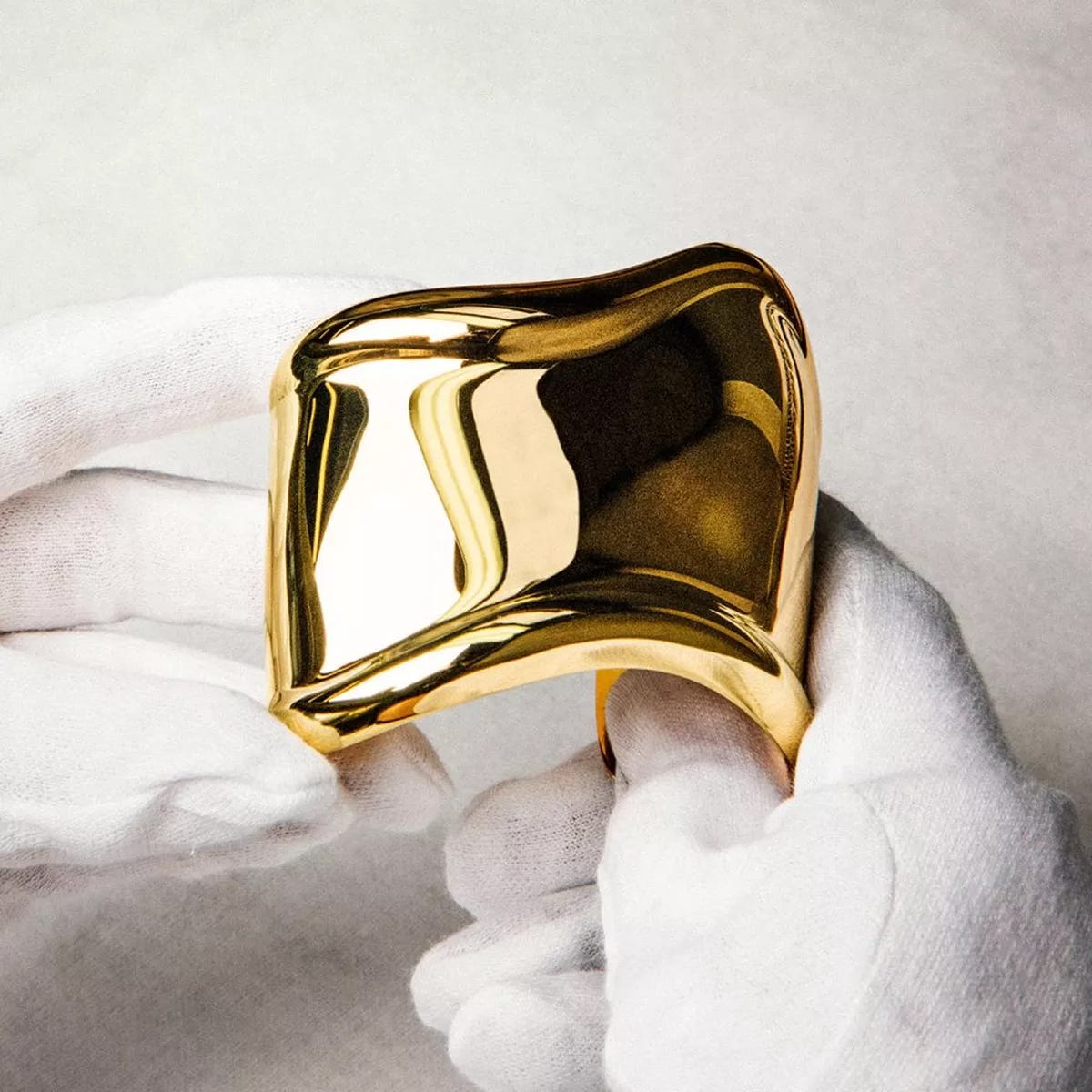
Every brand in existence is fighting to be culturally relevant. Some are delusional enough to believe they actually shape culture. (That’s a whole other essay.) But as Eugene Healey puts it, culture is created by people. It is slow.
So what happens to culture when we want to do everything quickly? If we optimise to such an extent that the journey disappears, we lose what we gain from that very experience. And that’s a travesty.
AI has exacerbated this — the idea that everything should be instant, seamless, perfect the first time around. If our attention spans are so eroded, how will we ever sit with anything long enough to obsess over it? How will we develop lifelong passions, or something as rare as a life’s work?
Are we trying to optimise an entire life into a single day?
When creative work lacks depth, we don’t have meaning; we just have content. And content is ten a penny in an AI world. There is no content shortage. It’s a meaning shortage we are suffering from.
Elsa was part of her creations, as her life was part of the process.
My mind can’t help but adopt this lens when thinking of brands. We repeatedly hear of long and complex customer journeys as if they are a nuisance, a problem to be solved. How selfish of these damn customers taking their time to decide! I hope to reframe that here.
That period of exploration is the long path. It’s the time when a human, with all our quirks and emotions, grows alongside the engagement they have with a brand. It’s a precious opportunity to mean something, to meet them where they are, to bring part of the passion that founded the business to another individual in the hope it contributes in some way to their life.
We shouldn’t be trying to minimise the journey but showing up meaningfully in each moment, sharing the life’s work. Many founders and leaders know exactly the perfectionism, obsession and pain Elsa describes. That’s not a liability. It’s the work. It’s the long game. The only mindset that builds something lasting.
Think about the brands you genuinely love. You probably can’t remember the exact moment you fell for them. It happened slowly. Through repeated encounters, through consistency, through showing up the same way over time until something shifted from recognition to feeling.
That accumulation is the love and and it should be protected.
Most of us, when the room gets dark, reach for the light switch.
Elsa didn’t.
Her homes sat unchanged for decades. Not frozen. Very much alive. A place she returned to, worked from, drew inspiration from until the very end. Built with such complete commitment to the process that it never stopped giving back.
She died in 2021. Her objects are still everywhere. Still being bought and worn. Still being passed between generations. No campaign engineered that. No strategy meeting decided it. She just refused to optimise the process out of existence.
That’s the whole point.
The difference between work that enters culture and work that passes through it isn’t budget or distribution or timing. It’s depth. It’s the long path. It’s knowing that some things cannot and should not be rushed and having the conviction to protect that, even now, especially now.
The question isn’t whether you believe in that. It's whether you're willing to wait for the dark.